For most established businesses in Surrey, owning the system beats paying a lead generation agency: a Google Business Profile that ranks, a website that converts, a phone that is always answered and a follow-up that happens on its own. Pay-per-lead directories are right for a new trade with no reviews and an empty diary, and an agency retainer is right only when you already spend on adverts and want someone to run them. Lead generation is any activity that produces an enquiry from someone who might pay you; the question is who owns the machine that does it.
What the leak costs before you buy a single lead
Before paying anyone for leads, count the ones you already get and lose. For a Surrey plumber the biggest leak is the phone. A call-out is £80 to £150 (verified). Here is an example, labelled as an example. Say the phone rings 20 times a week and six go unanswered because you are under a sink. Say half of those would have booked.
6 missed x 0.5 x £115 (midpoint of £80 to £150) = £345 a week
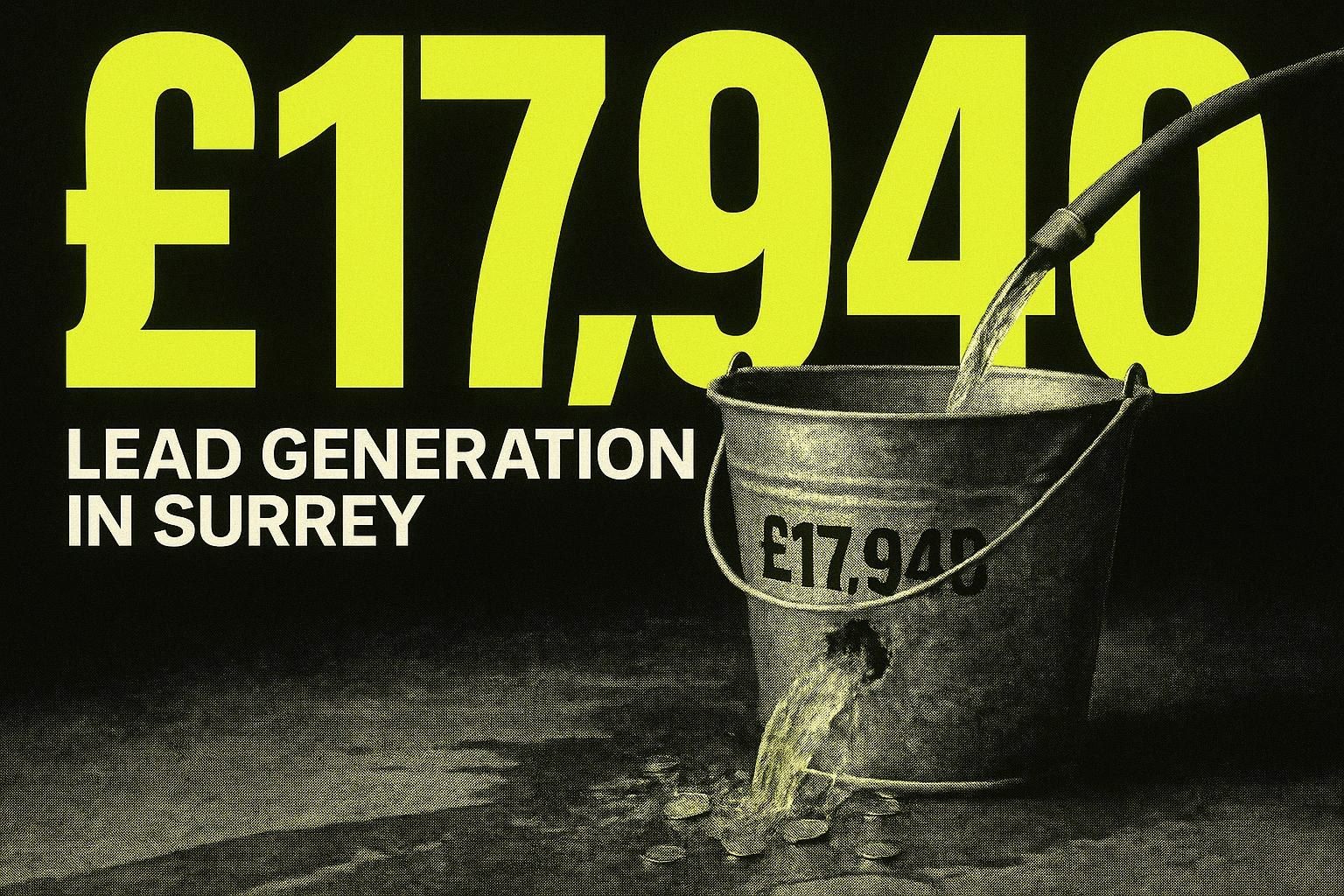
£345 x 52 = £17,940 a year
Nearly eighteen thousand pounds of call-outs a year, before the follow-on work those visits find, lost on calls you already paid for with your Google ranking and your reviews. Buying more leads to pour into the same phone is buying a bigger bucket with the same hole. The missed-call answering service comparison works through what each fix costs. For a roofer the sum is bigger: the average new roof is £8,000, so one missed call a month that would have booked is £96,000 a year.
What the search data says about lead generation in Surrey
UK Google searches each month, 2026 run-rate, checked 13 October 2026:
| Search term | Searches a month (UK) | Cost per click to advertisers |
|---|---|---|
| lead generation | 2,325 | |
| lead generation companies | 880 (12-month figure) | |
| lead generation agency | 562 | |
| plumber woking | 508 | about £9.83 |
| plumber surrey | 420 | about £5.05 |
| electrician surrey | 334 | about £4.75 |
| lead generation website | 220 | about £26.15 |
| lead generation surrey | 11 |
Three honest readings. First, "lead generation surrey" is 11 searches a month and "lead generation Woking", "lead generation Weybridge" and every other town are effectively zero. Nobody in Surrey is searching for a lead generation agency by town. Second, the customer searches are where the money is: 508 people a month look for a plumber in Woking. Those are the leads. The question is whether you own the page they land on or rent it. Third, on 13 October 2026, Bark, a pay-per-lead directory, sat at number three on Google page one for "web design surrey" and number eight for "marketing agency surrey". Directories outrank most local firms for their own trade. That is the business model: they rank, you pay them for the enquiry that would have been yours.
One more fact. The Google Maps results for "ai receptionist" from Shepperton on 13 October 2026 returned three listings, none with more than one review. For "answering service" the nearest listed businesses were in Feltham, Wokingham, Luton, Basingstoke and London. There is no local answering-service market with reviews to judge by, so judge any phone-answering option on a test call, not on a map listing.
Three ways to get leads
One problem: not enough enquiries, or enough enquiries and too many lost. Three options, two of them not us.
Option 1: pay per lead through a directory
What it means. You list on a directory that ranks for your trade and area. When a customer posts a job, you pay to contact them. Bark's own pricing page for professionals, checked 13 October 2026, says joining is free, leads are sent to you free, and you pay with prepaid credits to contact the customers you choose. The cost in credits is set per lead based on the service and the value of the job, credits are valid for three months, there is no commission, and new businesses get their credits returned if they win nothing from the first pack. Other trade directories work on membership or similar credit models; we have not fetched their terms tonight, so check the vendor's own page.
How you know it works. Jobs won divided by credits spent, tracked for three months. Bark's own wording, "professionals will only be given your details once they've sent you a quote", tells you the customer is collecting quotes, so you are competing on speed and price from the first message.
Where it falls down. You rent the customer. The same lead goes to other firms, the customer is price-shopping by design, and the moment you stop buying credits the enquiries stop. Nothing you paid for builds anything you own. For an established firm with reviews, every lead you buy is one you might have had free from your own Google listing.
Right for. A new trade in its first year, with no reviews, no ranking and an empty diary. In that position, paying for a few quoted jobs to get the first reviews is honestly the right move, and Bark's first-pack refund makes it a cheap test. Set a three-month limit and a review target, then stop.
Option 2: a lead generation agency on retainer
What it means. An agency runs adverts, usually Google and Meta, sends the clicks to a page, and charges a monthly fee plus the ad spend. Some bill per lead instead. No agency rate card was fetched tonight, so no figures here.
How you know it works. Cost per booked job, not cost per lead. An agency that reports leads and not jobs is reporting the number it controls, not the number you care about.
Where it falls down. Three ways. The adverts stop when the retainer stops, so again you own nothing. The agency's landing page and tracking are usually theirs, so leaving means starting again. And the leads land on the same unanswered phone: an agency can double your enquiries and you can still lose six in twenty to voicemail, which is what the sum at the top measures.
Right for. A firm already spending on adverts every month, with the phone answered and the follow-up working, that wants a specialist to run the spend better than the owner can. If that is you, a good ads agency is the right call and you should ask them for cost per booked job from day one.
Option 3: own the system
What it means. Four parts you keep. A Google Business Profile with reviews that ranks for "plumber woking" and its neighbours, the free listing that the SEO page and the Google Business Profile page cover. A website built to convert the click into a call. A phone that is answered every time, including evenings, by a person or an AI receptionist, a system that picks up, answers questions and books the job, as on the AI receptionist page. And a follow-up that texts the missed caller and chases the quote without anyone remembering, the CRM Integration on the CRM automation page. Bad Boy Labs builds the last two and sets up the first two; the point is that all four are yours.
How you know it works. Three numbers, monthly: calls from Google (your profile shows them), calls answered as a share of calls, and quotes chased as a share of quotes sent. When all three rise, the enquiries rise and nobody is taking a cut. Walk On The Wild Side, a pet shop in Tunbridge Wells, is the site-level proof: month one of the new site brought 1,500 visits, 39 enquiries, around 20 sales and 8 reservations, with 75% of visits from Google. That was owned, not rented.
Where it falls down. Time. Reviews and rankings take months, not days, and a new firm with no reviews cannot wait. It also needs a process: if nobody can say what happens when a call is missed, there is nothing to automate. And it is more than a one-person firm with a full diary needs.
Right for. Any established business that gets enquiries already, loses some of them, and intends to be trading in three years.
Which one should a Surrey owner pick?
Bottom line: own the system if you have been trading for more than a year; buy leads for a short, measured stretch if you are new; hire an ads agency only once the phone and the follow-up are fixed.
The reason is the sum. £17,940 a year walks out of a plumber's unanswered phone before any lead is bought. Fixing that is cheaper than any retainer and the gain is permanent. Rented leads and rented adverts both pour into the same phone, so the first money goes to the phone and the follow-up, and the second money goes to the Google profile and the site, because those are the assets that still produce enquiries in year three. The one exception is the new trade, where a few paid, shared leads buy the first reviews that make the owned system work.
| Your situation | Pick | Why |
|---|---|---|
| New trade, no reviews, empty diary | Pay per lead, three months, with a review target | Buys the first reviews; first-pack refund limits the risk |
| Established, enquiries arrive, some get missed | Own the system: phone and follow-up first | The leak is bigger than the shortfall |
| Already spending on adverts, phone and follow-up solid | Ads agency on cost per booked job | A specialist runs spend better than the owner |
How to start owning it this week
- Count last month's missed calls. Open the call log on your phone and the office line. Count calls that rang out or went to voicemail. Done looks like: one number, probably larger than you thought.
- Put your own figures into the sum above. Missed calls, share that would have booked, your average job. Done looks like: a yearly figure you can compare against any lead or retainer quote.
- Turn on a missed-call text. If your phone system or app can send a text to a missed caller, set it: "Sorry I missed you, I am on a job. Reply with your postcode and the problem and I will call within the hour." Done looks like: ring your own number from another phone, let it ring out, receive the text.
- Check your Google Business Profile shows calls. Open business.google.com, your profile, then Performance. Done looks like: a monthly call count you can watch.
- Ask the last ten customers for a review with a direct link from your profile's Ask for reviews button. Done looks like: the link sent to ten people today.
- If you are new, set the directory test. One credit pack, three months, a target number of reviews. Write the stop date in the diary. Done looks like: a date and a number, not an open-ended subscription.
- If you talk to an agency, ask one question: what is your cost per booked job for a client like me? If they answer in leads, keep looking.
Mistakes we see with lead generation
- Buying leads into an unanswered phone. Twice the enquiries, same six missed in twenty.
- Judging an agency on leads, not booked jobs. Leads are the number they control.
- Letting the agency own the landing page and the tracking. Leaving means starting from nothing.
- No stop date on the directory. A three-month test becomes a three-year habit.
- Skipping the reviews. The owned system runs on reviews. Ten this month is worth more than any advert.
So, a decision. Count last month's missed calls and put the number into the sum. If it is near zero, you have a shortfall problem, and a directory test or an ads agency is the right conversation. If it is not, do you want me to pull your call log and your Google profile numbers and show you, in pounds, what owning the phone and the follow-up would recover before you pay anyone for a lead? Yes, and the AI receptionist page and the CRM automation page show the two parts we build. No, and step three above still stops the leak tonight.