Yes, SEO is still worth it in 2026 for a local business, because the three things that decide who gets the job (the map pack, the reviews and whether the phone is answered) have not moved, and AI assistants draw their answers from the same pages Google ranks. What has changed is what a page has to do to be chosen: answer the question in the first paragraph, in plain words, with a real number. Pages built for volume earn nothing now. Pages built to be quoted earn twice, once from Google and once from the AI that reads them.
What does "AI answers the question first" mean?
When you search Google now, some results start with an AI Overview: a paragraph written by Google's AI that answers the question before the list of websites. ChatGPT, Perplexity and the others do the same thing without the list. For a business owner the worry is simple: if the answer is given at the top, does anyone scroll to my page?
The honest answer has two parts. For questions, yes, the AI often answers first. For buying, the AI still hands you to a business, and it chooses from pages it can read and trust. SEO, search engine optimisation, used to mean being ranked. In 2026 it means being ranked and being quotable. The name people are using for the second half is AEO, answer engine optimisation. "aeo" gets 4,425 searches a month in the UK (2026 run-rate, Google Ads data), "answer engine optimization" 325, "ai visibility" 244, "ai search optimisation" 214, "llm seo" 159 and "chatgpt seo" 76. The advertised cost per click on "ai visibility" is £44.33, which tells you how hard this is being sold. Treat that as a warning, not a signal.
What is stopping SEO costing you?
A worked example, labelled as an example, for a plumber in Woking. "plumber woking" gets 508 searches a month (UK, 2026 run-rate), and the published cost per click on that search is £9.83.
Say the plumber decides SEO is finished, stops maintaining the pages and the profile, and replaces the lost visibility by buying clicks instead. Say they buy a fifth of those searches as clicks, about 100 each month.
100 clicks x £9.83 = £983 each month
£983 x 12 = £11,796 a year, for one search term, in one town
Stop paying and the clicks stop the same day
That is the price of replacing organic visibility with paid, for a single term. The plumber's verified call-out is £80 to £150, so the ads have to produce a call from roughly every eight to twelve clicks just to cover themselves. The map pack and a maintained profile produce those calls without the meter running. That is the money reason SEO is still worth it, and it has nothing to do with AI.
What the data says about AI in Surrey searches (13 October 2026)
We pulled twenty Google searches today, from the ones a Surrey business owner would type when looking for help. Here is where the AI Overview appeared and where it did not.
| Search | AI Overview shown? |
|---|---|
| ai agency | Yes |
| ai agency surrey | Yes |
| website for dentists | Yes |
| website for plumbers | Yes |
| seo surrey, seo agency surrey, seo farnham | No |
| web design surrey, web design woking, web design guildford, web design camberley, web design leatherhead, web design reigate, web design walton on thames | No |
| marketing agency surrey, marketing agency weybridge, digital marketing agency surrey | No |
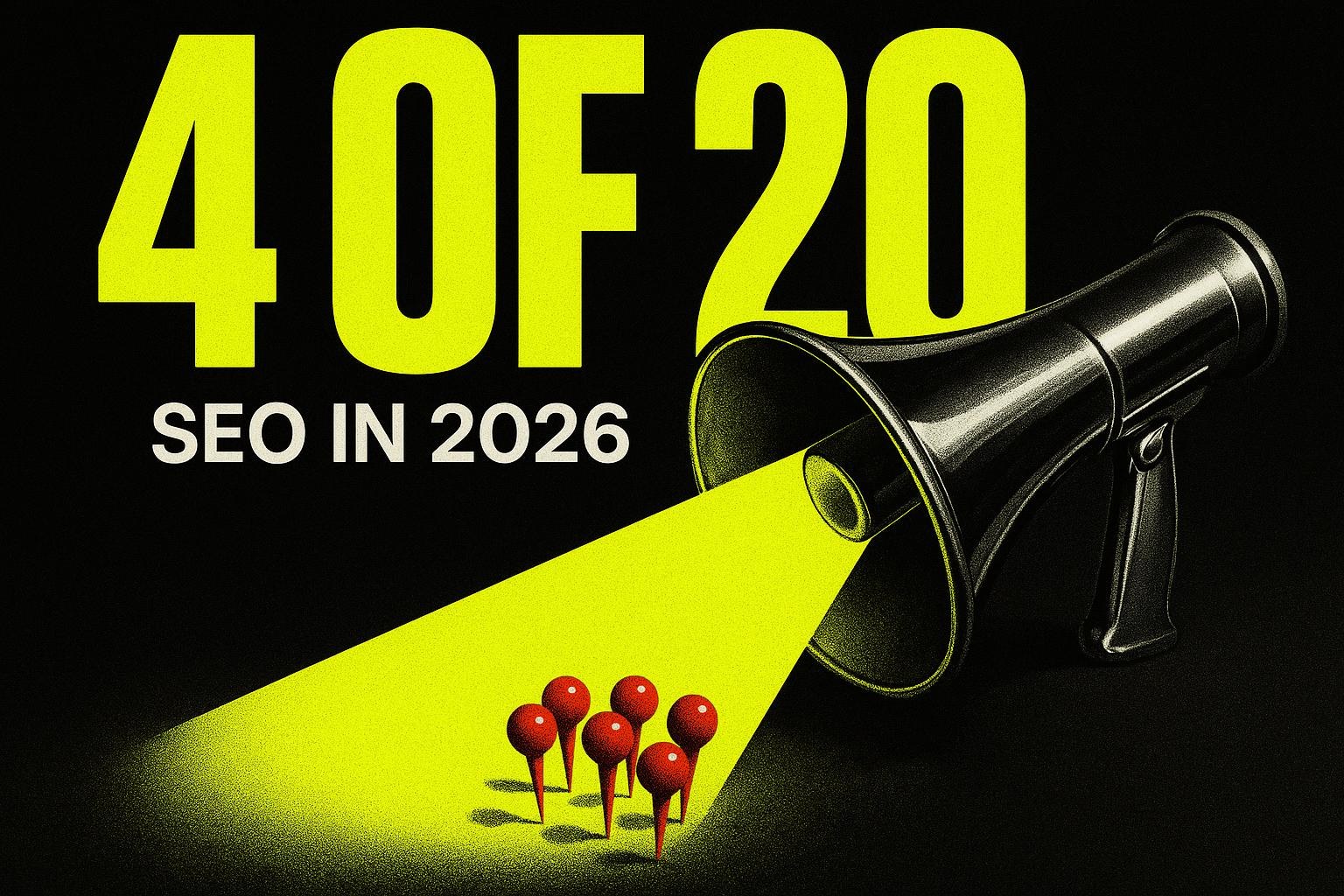
Four of twenty. And look at which four: the "what is an AI agency" style questions and the two "website for" searches, which read as questions about what a site should contain. On the sixteen searches where someone is looking for a supplier in a place, Google showed no AI Overview and went straight to the map pack and the list. The AI is answering questions. It is not yet replacing the local shortlist.
The worry is still real, and Google shows it. "Is SEO still worth it in 2026?" is one of the People Also Ask questions under both "seo surrey" and "seo farnham" today, and "Is SEO being phased out?" sits under "seo farnham". Owners are asking. The answer from the data is that the question searches are where the AI sits, which is exactly where an answer-first page gets quoted, and the supplier searches still work the old way.
One honest limit: we do not have a verified figure for how much of your traffic AI answers send or take, and nobody should give you one without showing the source. Anyone quoting a percentage of "AI search traffic" for your business is guessing.
What has changed and what has not?
| Has changed | Has not changed |
|---|---|
| Pages that answer the question in the first paragraph get quoted by AI Overviews and assistants. Pages that bury the answer under 400 words of introduction do not. | The map pack decides most local enquiries, and it is fed by your Google Business Profile: category, address, services, reviews. |
| Volume is dead. Fifty thin pages about the same service earn nothing; one deep page earns twice. | Reviews decide who gets clicked once you are shown, and AI assistants quote review counts too. |
| Headings now need to be the questions people type, because that is what the AI matches. | The phone has to be answered. A quoted page that leads to voicemail is a quoted page that loses the job. |
| Real numbers and named entities (the town, the trade, the year) are what make a page quotable rather than ignorable. | Search Console is still the only honest report, and it is still free. |
SEO, AEO and GEO for a small business explains the three terms you will hear and which one you actually need.
What are your three options?
Option 1: keep doing SEO the old way
What it means. More pages, more keywords in the headings, a blog post a week on whatever the tool suggests, links bought by the dozen.
How you know it works. You will not, because Search Console will show rising impressions and flat clicks. The pages are shown and not chosen, by people or by AI.
Where it falls down. It was already failing before AI. Thin pages for volume are precisely what Google and the assistants skip. Every month spent adding them is a month of fees for nothing.
Who it is right for. Nobody we can think of in 2026. If this is what your retainer is doing, stop it this month.
Option 2: stop SEO and buy ads instead
What it means. Let the site and the profile drift. Pay per click to appear at the top.
How you know it works. Fast and measurable: clicks, calls and cost are all in the ads account by Friday.
Where it falls down. The sum above. £11,796 a year for a fifth of one term in one town, and the enquiries stop the day you stop paying. Ads also do nothing for the map pack, which the customer scrolls to after the sponsored results, and a neglected profile still shows wrong hours and an unanswered number. Our note on ads and missed calls shows how much of ad spend dies after the click.
Who it is right for. A business that needs work in the next fortnight while the pages are rebuilt, with a site that converts and a phone that is answered. As a bridge, not a replacement.
Option 3: rebuild the pages answer-first and keep the profile
What it means. Fewer pages, each one answering a real question in the first paragraph, with the town, the trade, the year and a real number in it, headings written as the questions people type, and a short list of questions and answers. The profile and the reviews carry on as before, because the map pack has not changed.
How you know it works. Search Console shows clicks rising on the rebuilt pages, not just impressions. You start to see your own sentences in AI answers when you ask the assistant the question. Calls from the profile hold or rise.
Where it falls down. It is writing, and writing is slow. Five deep pages take longer than fifty thin ones. And none of it helps if the first paragraph answers a question nobody asks; the questions come from customers and from the People Also Ask boxes, not from a tool.
Who it is right for. Any local business that wants to be found in 2027 as well as 2026. Which is the answer to the title.
Which option should you choose?
Bottom line: rebuild your pages answer-first, keep the Google Business Profile and reviews exactly as before, and use ads only as a bridge while the pages earn their place.
The reason is in the two tables. The supplier searches, the ones that bring a customer to your door, still show no AI Overview and still go to the map pack, so the free, durable work on the profile is worth exactly what it was. The question searches, where the AI does answer first, are won by pages that answer first too, and a page that answers first is also the page Google ranks. You are not choosing between SEO and AI. You are writing one page that works for both, and writing fewer of them.
How to make a page quotable this week
Take your most important service page and do this to it. Then repeat for the next one.
- Find the question. Search your trade and town in Google and open the People Also Ask box. Write down the four questions. Ask your last five customers what they typed before they found you. Done looks like: one question, in the customer's words, at the top of your notes.
- Answer it in the first paragraph. Two or three sentences a stranger could copy out and repeat. Include the town, the trade and the year. Done looks like: a first paragraph that makes sense with nothing underneath it.
- Turn the headings into questions. Each section heading becomes the question it answers: "How much does a boiler repair cost in Woking?" not "Our boiler services". Done looks like: every heading could be typed into a search box.
- Put one real number in. A job value, a time, a count. Label any example as an example. Done looks like: a sentence a reader could check.
- Define the term once. One plain sentence: "A powerflush is a cleaning of your heating pipes under pressure." Done looks like: a reader who has never heard the word understands it by line three.
- Add four questions and answers at the end. From step one. Each answer starts with the answer, forty to ninety words. Done looks like: a reader could get the whole page from the questions alone.
- Check it in Search Console in four weeks. Performance, filter by the page, compare clicks to the four weeks before. Then ask an AI assistant the question and see whether your sentence appears. Done looks like: two numbers written down and a yes or no.
- Keep the weekly ten minutes on the profile. Reply to reviews, send the review link, add a photo. The map pack has not changed, so do not stop feeding it.
Mistakes we see
- Buying "AI visibility" as a separate service. It is the same page, written properly. A separate retainer for it is paying twice.
- Stopping the profile work because "AI changed everything". Sixteen of twenty supplier searches today showed no AI Overview and went straight to the map pack.
- Quoting a percentage of AI traffic. Nobody has a verified figure for your business. If a supplier gives you one, ask for the source.
- Adding pages to "cover" AI questions. Volume is what the AI skips. Rewrite the five that matter instead.
- Being quoted and going to voicemail. The assistant hands the customer to you. If nobody answers, it hands the next one to someone else.
The decision
Want me to take your single most important page, rewrite the first paragraph and headings answer-first, and show you the before and after in Search Console four weeks later? Say yes and send the page. Say no and run the eight steps above on it yourself; they are the whole method. If you want the longer version of what has and has not changed, this is how we approach AI search, and this is the SEO work it sits on top of.